


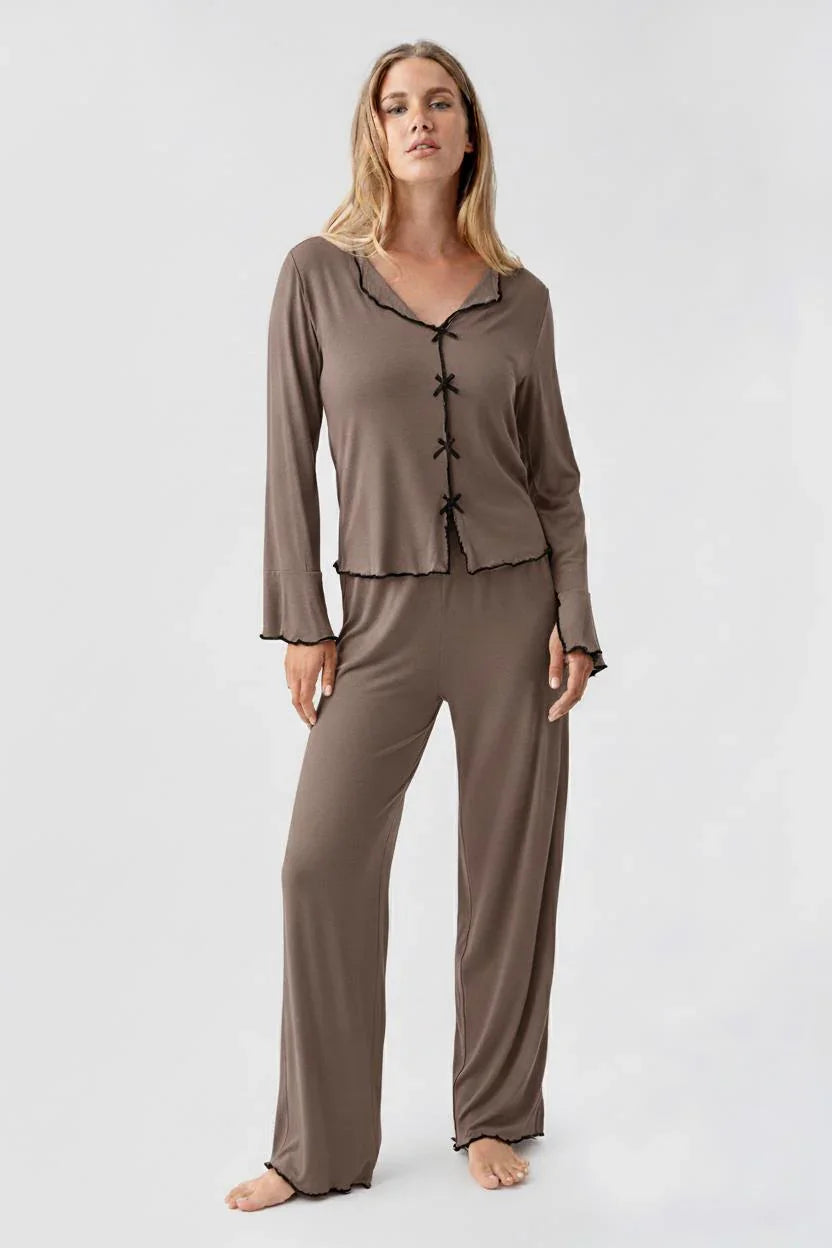

Homewear in Transitional Seasons: The Power of Layering and Flexible Fabrics
The cool breezes of autumn or the unpredictable weather conditions of spring bring about a significant transformation in our indoor routines and clothing choices. Sudden drops or rises in temperature during the day make it challenging to maintain comfort at home with single-piece thick or thin clothing. During these transitional periods, the most practical and technical way to preserve the comfort and aesthetics of home life is to adopt a layered clothing approach. Layers created by combining the right pieces allow you to instantly adapt to temperature fluctuations throughout the day. However, the true hidden heroes that prevent layered clothing from appearing bulky or restrictive are the flexible textures and natural yarn engineering of the fabrics. Artış Collection's new season loungewear selection, with its viscose, modal, and flexible elastane textures, offers ideal thermal balance and uninterrupted freedom of movement during seasonal transitions without weighing down the body.
Why Does Loungewear Require a Special Approach During Seasonal Transitions?
Seasonal transitions are periods when body temperature changes most rapidly due to hormonal and environmental factors. A pleasant coolness felt in the morning can give way to warmer weather by noon. The biggest clothing mistake made during this process is to opt directly for thick, non-breathable synthetic fabrics to protect against the cold.
Synthetic winter garments trap body heat, leading to sweating, and then to catching a chill with the slightest airflow. At this point, the fundamental philosophy of loungewear during seasonal transitions is to combine lightweight layers that allow the skin to breathe and provide moisture control, stacked in appropriate proportions.

How to Apply the Art of Layering at Home?
When layering clothes at home, the basic rule to follow is to correctly plan the fabric thickness and form from the innermost piece to the outermost.
1. Base Layer: First Touch to the Skin
The innermost layer is the one that directly touches your skin. The clothing chosen for this layer should be non-irritating, have high moisture absorption capacity, and lightly hug the body.
Ideal Pieces: Flexible camisoles or short-sleeved bodysuits, thin t-shirts, and draped home tank tops.
Fabric Choice: Viscose and modal textures that absorb moisture and offer a silky touch to the skin are the healthiest foundation for the base layer.
2. Mid Layer: Thermal Balance and Style
The mid-layer, added over the base layer, forms the main body that maintains body temperature. It should be flexible enough to be easily removed when the weather warms up later in the day.
Ideal Pieces: Thin long-sleeved pajama tops, draped home tunics, or lightweight pajama sets.
Design Detail: Designs with front buttons or wide necklines offer great ease of use in mid-layers as they make dressing and undressing practical.
3. Outer Layer: Complementary Touch and Robes
The most prestigious and functional piece of indoor layered clothing is the outer layer. An outer layer that you put on during sudden drops in temperature, upon waking up in the morning, or during indoor work routines, allows you to instantly achieve a polished look.
Ideal Pieces: Soft-textured robes, flexible cardigans, or draped shawls.
Outfit Harmony: A tone-on-tone robe added over a solid-colored pajama set creates effortless elegance at home.
The Key to Freedom of Movement: The Power of Flexible Fabrics
Layering can restrict movement or create a feeling of heaviness on the body if the right fabrics are not chosen. This is where the fiber structure and weaving technology of the fabric come into play. Flexible fabrics, thanks to their ability to stretch in four directions, stretch with the body while sitting, lying down, or moving around the house.
Thermal Performance of Viscose and Modal Fabrics
Breathability: Viscose and modal yarns, which have a higher moisture absorption capacity than cotton, create air circulation between layers, preventing sweating.
Lightness and Fluidity: These highly flexible fabrics are extremely lightweight. Even when layered, they do not create bulk or a coarse appearance on the body's contours.
Antistatic Property: The problem of static electricity and clothes sticking to the skin, which is common during seasonal transitions, is prevented by high-quality flexible fabrics.
Loungewear Combination Strategies for Seasonal Transitions
|
Usage Scenario |
Base Layer |
Mid Layer |
Outer Layer (Complementary) |
|
Morning Routine & Breakfast |
Soft Strap Camisole |
Flexible Pajama Bottoms |
Soft Robe |
|
Working from Home (Home-Office) |
Crew Neck T-shirt |
Elastic Waist Pants |